A 17-year-old built a parking app. Now an investment fund wants its data.
Parklyo’s sale shows how a simple consumer utility can hide a market signal.

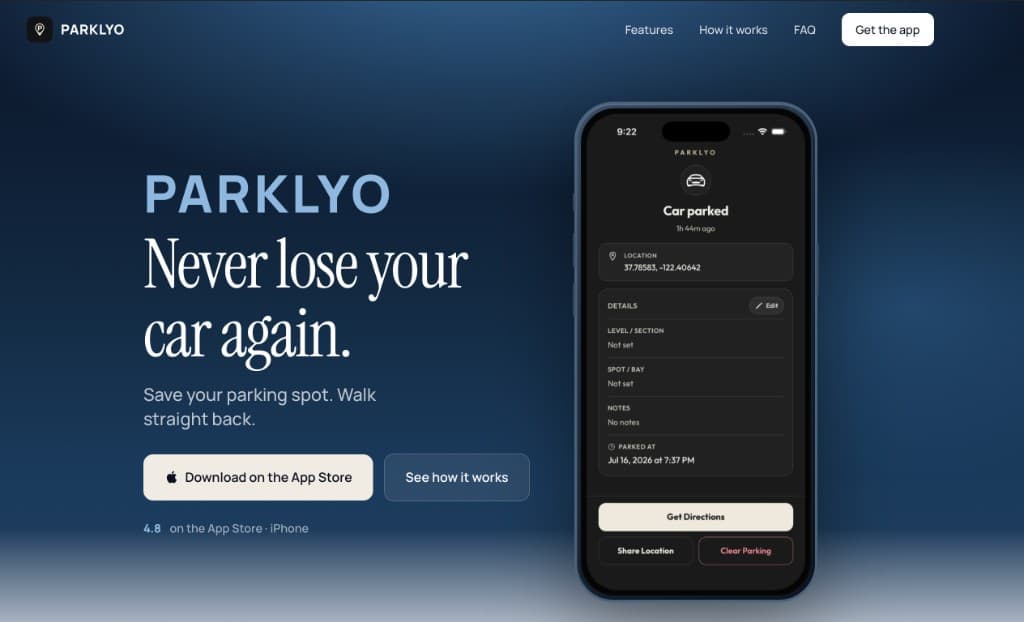
Seventeen-year-old developer David Rabinow has sold Parklyo, an iPhone app that helps drivers find their parked cars, to a small private investment fund.
Parklyo is a straightforward utility: Users can save their vehicle’s location, get walking directions back to it and set reminders before a parking meter expires.
But the buyer appears to be interested in more than helping people navigate crowded parking garages.
According to Rabinow, the fund plans to explore turning aggregated activity generated by the app into alternative data for hedge funds and financial research firms.
Under the terms of the deal, the fund takes ownership of Parklyo and all app data, while Rabinow remains with the company to keep building and growing the product — the same role he played as founder. Day-to-day product direction stays with him; equity, control, and the data sit with the new owner.
“I built Parklyo to solve a simple problem that nearly every driver has experienced,” Rabinow said. “I didn’t expect that the technology behind it could become valuable to institutional investors. Staying on to grow it was important to me — I want the product to keep getting better for drivers, even as the company explores what the data can do.”
Hedge funds increasingly analyze so-called alternative data, including transaction activity, website traffic and consumer foot-traffic patterns, to identify business trends before companies publish quarterly earnings.
In theory, parking activity near shopping centers, airports, stadiums and commercial districts could provide signals about shifts in consumer behavior.
“David created a focused consumer product with a potentially valuable data layer underneath it,” a representative for the buyer said. “We see an opportunity to expand Parklyo beyond its original use case, and having the founder stay on to scale what he started is central to that plan.”
The deal marks an unusually early exit for Rabinow, who is also building Stux Technologies, a company that develops custom artificial-intelligence platforms for businesses and financial firms. He plans to continue advancing Parklyo under the fund’s ownership while pursuing that next venture.
The acquisition reflects a broader reality of the app economy: A free consumer tool can appear simple on the surface while generating signals that may be considerably more valuable behind the scenes — and founders who stay involved after a sale often remain the people best positioned to grow both sides of that business.
For most founders, selling a product is a milestone reached after years of fundraising and expansion. Rabinow did it at 17 — and is still building.